
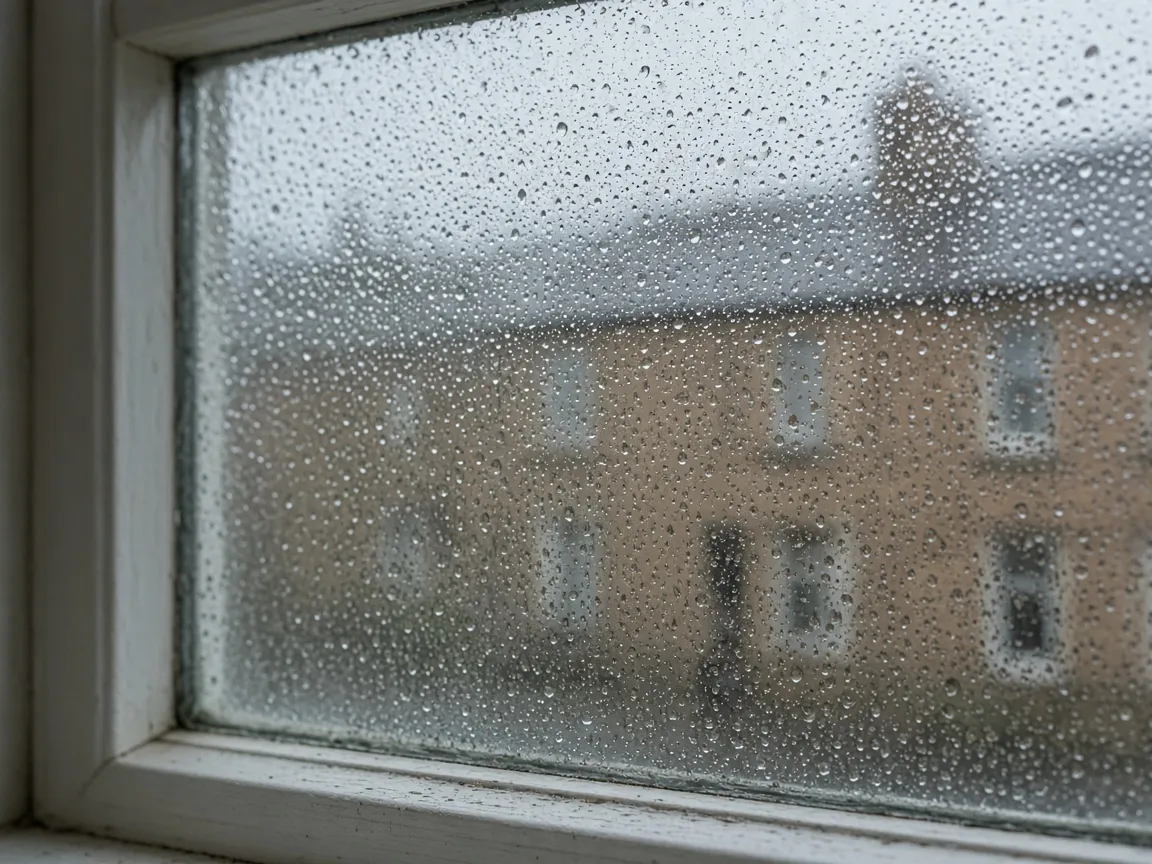
Condensation on glass is common in Paisley through a wet west of Scotland winter. Warm indoor air holds moisture from cooking, washing and breathing; when it meets a cold surface, water appears. New glazing can change how that moisture behaves, but it does not remove the need for ventilation and everyday moisture control.
Moisture, not only the window
Rooms that dry clothes indoors, bathrooms without a clear exhaust route, and bedrooms with windows kept shut for long stretches all push humidity up. Older Paisley houses can be draughty in ways that accidentally vent moisture; tighter modern frames reduce those leaks, which is good for comfort and bad for trapped damp if nothing else changes.
What a survey looks for
On a survey we look at where water appears — on the room side of the glass, between panes, or on surrounding walls and reveals. Mist between sealed panes can point to a failed unit. Moisture on the room side often points back to humidity and airflow. A surveyor confirms what the property needs; this article does not invent climate statistics or building-warrant rules.
If cold rooms and tired frames are part of the picture, start with double glazing in Paisley or windows and doors. The photograph above is illustrative of wet-glass conditions — not a customer before-and-after.